Cannabis social media marketing in 2026 looks very different from what worked two years ago. Platforms have stricter rules, algorithms are harder to predict, and organic content needs more strategy to gain traction. Still, cannabis brands are growing loyal, engaged audiences on Instagram, TikTok, YouTube, and other channels by sharpening their approach.
The brands winning right now are not chasing loopholes. They understand each platform’s rules, know what their audience wants to see, and create content that builds trust without putting their accounts at risk.
This guide breaks down what works today, including platform-specific policy insights, smart content strategies, influencer marketing for cannabis dispensaries, and a practical content calendar tailored to the 2026 social media landscape.
The Social Media Landscape for Cannabis Brands in 2026
Social media has never been a simple channel for cannabis brands. In 2026, it is more structured than ever, and the brands growing their audiences are those that have learned to work within that structure rather than around it.
The global cannabis market is projected to surpass $60 billion by 2026. And, a significant share of that consumer attention lives on social media. So, the opportunity is real, but the rules are just stricter.
Here is where each major platform stands:
- Direct product promotion is prohibited under Meta’s policies.
- Pricing, purchase encouragement, and product ads risk account removal
- Age gating is possible, but it does not guarantee compliance.
- What works: Education, community building, and lifestyle content
🎵 TikTok
- Among the strictest platforms for cannabis content
- Prohibits depictions of consumption, product promotion, and certain cannabis related hashtags
- Shadow banning is a documented risk, often without formal notification.
- What works: Wellness, advocacy, and plant-based lifestyle content that stays compliant
📢 X (formerly Twitter)
- More relaxed than other platforms on organic cannabis content
- Permits cannabis advertising in licensed markets with age verification and prior platform authorization
- Reach and engagement have declined since 2022
- What works: Community conversation and brand advocacy, rather than growth-driving content
▶️ YouTube
- Cannabis ads are prohibited across the board.
- Organic educational content, strain reviews, and industry commentary have built substantial audiences without violating terms.
- What works: Long-form educational content that avoids direct sales language
Every platform has its own rules, its own algorithm, and its own version of what cannabis content is allowed to look like. A strategy that works on YouTube will not work on TikTok. Knowing the difference is where it starts.
What Works on Instagram for Cannabis Brands
Instagram is still the most valuable visual platform for cannabis brands in 2026. Direct product promotion has never been allowed under Meta’s policies, and enforcement has gotten more consistent. The brands growing right now are not the ones posting product shots with prices in the caption. They are the ones building something worth following.
⭐What Instagram rewards in 2026:
- Reels, saves, and shares carry the most algorithmic weight.
- Comments and passive likes matter less than they used to
- Content needs to be useful, entertaining, or interesting enough to save or share
🚩 What gets accounts flagged:
- Pricing in captions
- Calls to action around purchasing
- Content positioning cannabis as a solution to a specific medical condition
Organic Content, Stories, and Reels Strategy
Reels
The single biggest organic reach opportunity on Instagram for cannabis brands is Reels. And the content that performs well on it is:
- Educational content around strains, terpene profiles, and consumption methods drives strong save rates.
- Behind-the-scenes content from cultivation or dispensary operations builds authenticity.
- Advocacy and industry news positions the brand as a credible voice, not just a retailer.
- Trend-based content adapted to the cannabis context drives reach when it stays compliant.
| ✨ Pro Tip: Saves are the single most underrated metric on Instagram for cannabis brands. A post with 500 saves and 200 likes is performing significantly better in the algorithm’s eyes than one with 2,000 likes and no saves. Build content with the save in mind, not the like. |
Technical details that matter:
- Reels between 7 and 15 seconds have higher completion rates, which the algorithm favors.
- Captions should be conversational and keyword relevant, not promotional.
- Specific, relevant hashtags contribute to discoverability.
Stories
Stories are built for retention and relationship, not reach. They keep existing followers engaged between feed posts.
What works well:
- Polls and question stickers that invite participation
- Day in the life content from staff or founders
- Real-time updates from events or product launches
- Links to menus, blog content, or educational resources via a link sticker
Feed Content
The Instagram feed functions as a brand portfolio in 2026. New visitors look at the grid to decide whether to follow. What that means in practice:
- Visual consistency matters more than posting frequency
- A clear content mix across education, community, brand values, and product context
- A recognizable point of view that does not cross into direct promotion
| 📌Building a compliant Instagram presence starts with knowing what content works across the board. Read our Cannabis Content Marketing Guide for a deeper look at how to develop content that performs on every platform without putting your account at risk. |
TikTok for Cannabis: Navigating Restrictions
TikTok has some of the strictest cannabis content restrictions of any major platform, but it also has the most engaged younger audience online right now. For cannabis brands, that tension is exactly what makes cannabis TikTok marketing worth figuring out.
TikTok’s community guidelines explicitly prohibit content that depicts, promotes, or facilitates the sale of cannabis. What makes it particularly challenging is that enforcement is not always transparent. Shadow banning happens quietly and often, with no formal notification.
⭐What Works on TikTok for Cannabis Brands
- Wellness and lifestyle content that speaks to cannabis culture without depicting consumption
- Educational content around advocacy, legislation, and industry news
- Founder and team content that puts a human face on the brand
- Humor and culture-based content that taps into community identity
- Duets and stitches with relevant creators in wellness or lifestyle spaces
🚩What to Avoid
- Showing cannabis products, packaging, or consumption in any context
- Restricted hashtags like #weed, #cannabis, or #marijuana
- Pricing, availability, or purchase encouragement in any form
- Health benefit or therapeutic effect claims
Treat TikTok as a brand awareness and community-building channel, not a direct sales driver. The brands winning on cannabis TikTok in 2026 are the ones playing the long game.
| ⚠️ Disclaimer: TikTok’s content policies around cannabis are subject to change and are enforced inconsistently across regions. What is tolerated in one market may be actively suppressed in another. Cannabis brands operating across multiple markets should review TikTok’s community guidelines regularly and adjust content accordingly. |
Influencer Marketing for Cannabis Dispensaries
Cannabis influencer marketing in 2026 is not about sending free products to anyone with a decent following. It is a strategic channel that, when done right, consistently outperforms most other growth levers available to cannabis brands operating under platform restrictions.
The core challenge is straightforward. The same platform restrictions that apply to brand accounts also apply to creator accounts. An influencer cannot post content on Instagram or TikTok that a brand could not post itself. The value of a partnership is not in direct promotion. It is in bringing the brand into a conversation that the audience is already having.
Micro vs Macro Influencers: What Converts
In cannabis influencer marketing, micro-influencers consistently outperform macro-influencers on the metrics that matter: engagement, cost-effectiveness, and conversion.
Macro Influencers (100,000+ followers)
- Broad reach and immediate visibility
- Lower engagement rates relative to follower count
- Less targeted audiences
- Higher cost, often $5,000 and above per post
- Best for brand awareness and launch campaigns
Micro Influencers (10,000 to 100,000 followers)
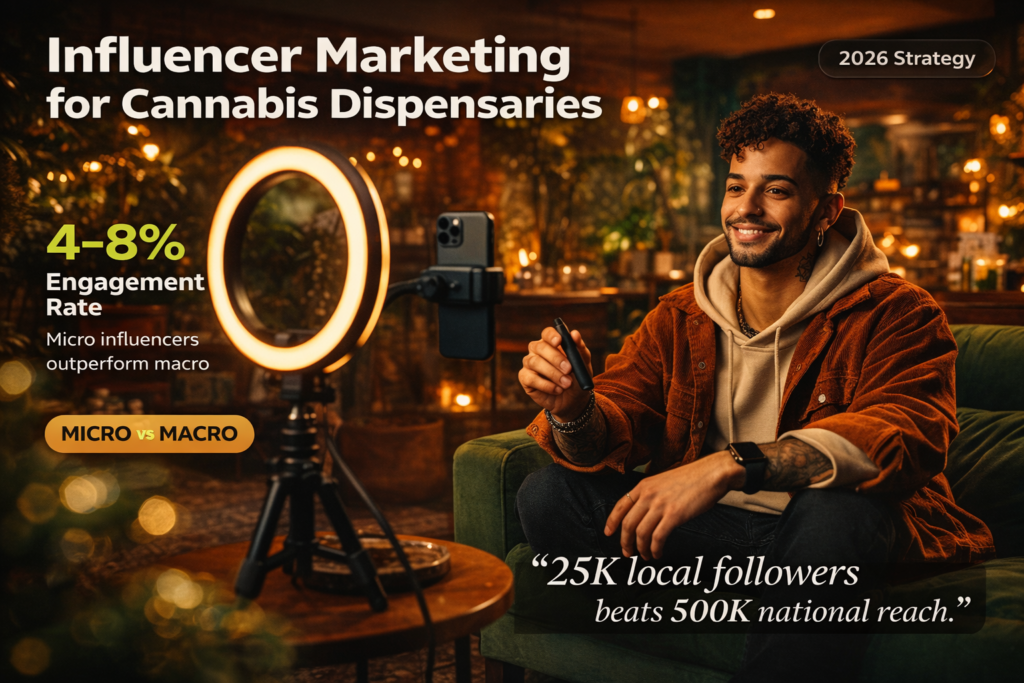
- Engagement rates of 4 to 8% on average
- Highly targeted, niche audiences
- Higher trust and authenticity
- More cost-effective, often $500 to $2,000 per post
- Best for dispensary social media growth, community building, and conversion
What actually converts for cannabis dispensaries:
A cannabis creator with 25,000 highly engaged followers in a specific city is worth significantly more to a local dispensary than a macro influencer with 500,000 followers spread nationally.
Content formats that convert best:
- Educational content walks audiences through strains, product categories, or consumption methods.
- Dispensary visit content showing the in-store experience, staff, and culture.
- Lifestyle integration content where cannabis fits naturally into wellness or social context
- Advocacy content that aligns the brand with causes the audience already cares about
Finding the right cannabis influencers:
- Their existing content aligns with the brand’s values and audience.
- Engagement is genuine, not inflated by purchased interactions.
- They have experience navigating platform restrictions.
- Creative freedom is part of the partnership structure.
For cannabis brand social growth in 2026, micro influencers with genuinely engaged local audiences deliver stronger, more measurable results than macro influencers with broad but shallow reach.
YouTube Cannabis Marketing — What’s Allowed
When it comes to cannabis social media marketing, YouTube is the most underutilized platform. Most cannabis brands write it off because ads are off the table entirely. But the organic opportunity on YouTube is bigger and more durable than almost anything available on Instagram or TikTok, and the brands that have figured that out are quietly building some of the most loyal audiences in the industry.
YouTube prohibits cannabis ads but allows organic educational content, making this distinction key for brand strategy.
What cannabis brands can do on YouTube:
- Educational content around strains, terpene profiles, consumption methods, and product categories
- Dispensary tour and behind-the-scenes content that shows the brand experience without promoting specific products for sale
- Industry news, legislative updates, and advocacy content that positions the brand as an informed voice
- Founder and team interviews that build brand personality and trust
- Cannabis cultivation and processing content for audiences interested in the plant itself
What gets cannabis content demonetized or removed:
- Direct sales language or purchase encouragement of any kind
- Content that targets minors or could reasonably appeal to underage audiences
- Health or therapeutic claims that position cannabis as a treatment for specific conditions
- Content featuring consumption in a way that glorifies or encourages use without an appropriate context
Technical details that matter for cannabis social media marketing on YouTube:
- Videos over 10 minutes perform significantly better in terms of watch time and search ranking.
- Keyword-rich titles and descriptions are critical for discoverability, as YouTube is the second-largest search engine in the world.
- Custom thumbnails drive click-through rates more than almost any other single factor.
- Consistent publishing schedules signal channel authority to the algorithm.
- End screens and cards keep viewers on the channel and improve overall session time.
Cannabis social media marketing on YouTube is a long game. The content takes more time and resources to produce than a Reel or a TikTok, but it compounds ways that short-form content rarely does. A well-optimized educational video from two years ago can still be driving dispensary visits and brand awareness today.
| ✨Pro Tip: YouTube’s search algorithm treats video descriptions as seriously as it treats titles. A well-written description that includes relevant keywords, a clear summary of the video content, and links to related resources can significantly improve a video’s search ranking over time, even months after it was originally published. |
Platform Comparison for Cannabis Social Media Marketing in 2026
| Factor | TikTok | YouTube | X | |
| Cannabis Ad Policy | Prohibited | Prohibited | Prohibited | Permitted in licensed markets with prior authorization |
| Organic Content | Allowed with restrictions | Heavily restricted | Permitted with content guidelines | Generally tolerated |
| Primary Audience | 18 to 34, visually driven | 18 to 29, highly engaged | 18 to 45, high purchase intent | 25 to 49, news and conversation driven |
| Content Format | Reels, Stories, feed posts | Short-form video | Long-form video | Text, images, short video |
| Content Longevity | 48 to 72 hours | 24 to 48 hours | Years | Hours |
| Search Discoverability | Low | Medium | Very high | Low |
| Shadow Banning Risk | Medium | High | Low | Low |
| Engagement Rate | Medium | High | Medium to high | Low to medium |
| Compliance Risk | Medium | High | Low to medium | Low |
| Content Production Effort | Medium | Low to medium | High | Low |
| Best Content Type | Educational, lifestyle, behind the scenes | Wellness, advocacy, culture | Long-form education, dispensary tours, industry news | Community conversation, brand advocacy |
| Long Term ROI | Medium | Low to medium | Very high | Low to medium |
| Best Use Case | Brand storytelling, community building | Brand awareness, younger audience reach | Cannabis brand social authority, search-driven growth | Community engagement, real-time conversation |
Building a Compliant Social Media Content Calendar for Cannabis Brands
A content calendar is not just an organizational tool for cannabis social media marketing. It is the difference between a brand that shows up consistently and one that scrambles to post something every few days, hoping for the best. For cannabis brands specifically, it is also the first line of defense against compliance issues that come from rushed, unreviewed content going live without proper consideration.
The cannabis brands with the most consistent social media growth in 2026 are not necessarily the ones with the biggest budgets or the most creative teams. They are the ones that plan ahead, review content before it goes live, and build a publishing rhythm that the algorithm rewards and the audience comes to expect.
What a compliant cannabis content calendar looks like:
- Content is planned at least two to four weeks in advance.
- Every piece of content is reviewed against platform-specific guidelines before scheduling.
- A clear content mix is maintained across education, community, brand values, and culture.
- Platform-specific formats are accounted for: Reels for Instagram, short-form for TikTok, and long-form for YouTube.
- Key dates, legislative milestones, and industry events are mapped out at the start of each quarter.
- A compliance review step is built into the publishing workflow, not added as an afterthought.
Content Types That Do Not Get Flagged
| Content Type | Best Platform | Why It Works | Compliance Risk |
| Strain and terpene education | Instagram, YouTube, TikTok | High save and watch time rates, genuine audience value | Low |
| Behind-the-scenes dispensary content | Instagram Reels, TikTok, YouTube | Builds authenticity and brand familiarity | Low |
| Staff and founder spotlights | Instagram, TikTok, YouTube | Humanizes the brand, builds trust and connection | Low |
| Legislative and advocacy content | X, YouTube, Instagram | Positions the brand as a credible industry voice | Low |
| Beginner cannabis guides | YouTube, Instagram | Captures new consumer audience, high search intent | Low |
| Lifestyle and wellness content | Instagram, TikTok | Places cannabis in a broader cultural context | Low to medium |
| Community events and local partnerships | Instagram, TikTok | Drives local dispensary social media engagement and foot traffic | Low |
| Industry news and market trends | YouTube, X, Instagram | Builds authority and relevance in the cannabis space | Low |
Content Review Checklist Before Every Post
Before any piece of content goes live as part of a cannabis social media marketing strategy, it should clear these checks:
| ✅Check | What to Verify |
| Pricing and purchase language | No pricing, availability, or purchase encouragement included |
| Health claims | No therapeutic or medical benefit claims of any kind |
| Audience appropriateness | Content cannot appeal to or be accessed by minors |
| Platform specific guidelines | Reviewed against the specific policies of the platform it is being posted to |
| Hashtag review | No restricted or suppressed hashtags included |
| Visual content | No consumption imagery in a promotional context |
Social Media KPIs for Cannabis Brands
Cannabis social media marketing performance cannot be measured solely by follower count. Here is a full breakdown of the KPIs that matter across every stage of the social media funnel.
Reach and Awareness KPIs
- Impressions — how many times the content was displayed, regardless of engagement
- Reach — how many unique accounts saw the content.
- Share of voice — how the brand’s social presence compares to competitors in the same market
- Profile visits — how many people visited the brand’s profile after seeing content
Engagement KPIs
- Engagement rate — total engagements divided by reach, the most reliable indicator of content quality
- Saves — one of the strongest signals of genuine content value on Instagram
- Comments — quality of conversation generated, not just volume
- Shares and reposts — how often content is distributed by the audience organically
- Story replies — direct audience engagement with brand content.
Conversion KPIs
- Link in bio clicks — how many people moved from social content to the brand’s website or menu
- Online order attribution — orders that can be traced back to a social media touchpoint
- Loyalty program sign-ups driven by social content
- Email list growth attributed to social media campaigns
- Dispensary foot traffic correlated with social media activity and campaign periods
Content Performance KPIs
- Watch time and completion rate for video content on YouTube and Instagram Reels.
- Save rate on Instagram: saves divided by reach.
- TikTok completion rate is the percentage of viewers who watch a video to the end.
- Click-through rate on Stories with link stickers.
- Top performing content by format, used to inform future content planning
Influencer Marketing KPIs
- Reach delivered by influencer partnerships relative to cost.
- Engagement rate on influencer content compared to brand content benchmarks
- Promo code or referral link redemptions tied to specific influencer partnerships
- Audience overlap between influencer following and brand target demographic
- New follower growth during and after influencer campaign periods.
What Good Looks Like by Platform:
| Platform | Primary KPI | Secondary KPI | Benchmark to aim for |
| Engagement rate | Saves and Reels reach | 3 to 6% engagement rate for cannabis brands | |
| TikTok | Video completion rate | Profile visits and follower growth | 30% and above completion rate |
| YouTube | Watch time | Click through rate and search ranking | 40 to 50% average view duration |
| X | Impressions and link clicks | Follower growth | Consistent month on month impression growth |
Cannabis social media marketing performance should always be measured against business outcomes, not vanity metrics. Follower count means nothing if it doesn’t translate into dispensary visits, online orders, or a growing customer base.
Cannabis Social Media Marketing in 2026 and Beyond
Cannabis social media marketing is still evolving, and that is actually a good thing for the brands that are paying attention. The platforms are getting more structured, the audiences are getting more sophisticated, and the cannabis brands that have built their social presence on genuine value, consistent content, and compliant strategies are already seeing what that compounds into over time.
The opportunity ahead is significant. As legal markets expand, platform policies continue to mature, and consumer comfort with cannabis grows, the brands that have done the work of building real audiences and real trust will be the ones best positioned to capitalize on it. The foundation you build today is what your growth is built on tomorrow.
Ready to Grow Your Cannabis Brand Online?
If you are looking for cannabis services that help your business grow and build a stronger online presence, CBD Marketing Solutions can help. From Affiliate Marketing to SEO, we work with cannabis brands that are serious about building something real. Let’s talk.
📞 +1 209 813 4209 ✉️ info@cbdmarketingsolutions.com
FAQs
Can a Cannabis Brand Get Permanently Banned from Instagram or TikTok?
Yes. Repeated policy violations, especially around direct product promotion or consumption content, can result in permanent account removal. This is why building a compliant content strategy from the start matters more than testing what the platform will tolerate.
Is It Worth Building a Cannabis Brand Presence on LinkedIn?
Yes, particularly for B2B cannabis brands, suppliers, and agencies. LinkedIn is significantly more permissive around cannabis industry content and is one of the strongest platforms for reaching investors, retail partners, and industry professionals.
Can Cannabis Brands Use Pinterest for Marketing?
Pinterest prohibits the promotion of cannabis products and related content, making it a limited channel for most cannabis brands. It works better for hemp and CBD adjacent lifestyle content where the connection to cannabis is less direct.
How Do Cannabis Brands Handle Negative Comments on Social Media?
Responding promptly, professionally, and without being defensive is the standard approach. Negative comments about the product experience or service are best handled by quickly moving the conversation to a private channel rather than engaging publicly in an extended back-and-forth.
Should Cannabis Brands Have Separate Accounts for Different Product Lines?
Generally no. A single brand account with a clear content mix performs better algorithmically and builds a more cohesive brand identity than splitting attention and resources across multiple accounts.
How Do Cannabis Brands Grow Their Email List Through Social Media?
Link-in-bio tools, Stories link stickers pointing to a sign-up page, and gated content, such as strain guides or consumption resources, offered in exchange for an email address, are the most effective approaches for building an owned audience alongside a social media following.
What Is The Best Way to Handle a Cannabis Brand Account That Has Already Been Flagged?
Review and remove any content that violates platform policies, adjust the content strategy going forward, and if the account has received a formal warning, reach out to the platform’s support directly. Starting fresh with a new account is sometimes the most practical option if violations have been significant.