
Kratom digital marketing isn’t like promoting typical eCommerce products; it comes with many platform restrictions, tight rules around product claims, and limited ad access. So exactly how do successful brands still grow? That’s exactly what this guide will break down!
From how to market Kratom online using compliant, sustainable strategies that actually work, to building a strong Kratom digital marketing foundation, this guide will be helpful for you. Whether you’re just starting or scaling, this blog explores practical ways to boost Kratom brand awareness and create a results-driven Kratom content strategy that supports long-term growth.
The Kratom Marketing Landscape In 2026
Kratom brands still face a very different online marketing environment than most e-commerce businesses. In 2026, the biggest challenge is not just competition. It is the mix of ad restrictions, claim-related risk, and closer review of product messaging.
Why Do Most Ad Platforms Restrict Kratom Advertising?
- No FDA approval: Kratom is not approved as a drug, dietary supplement, or food ingredient in the U.S., which makes it risky to promote commercially.
- Strict claim policies: Brands cannot make medical or health claims, and violations can lead to warnings or bans.
- Platform risk policies: Google, Meta, and others often treat Kratom as a “high-risk” or unclear category, leading to inconsistent approvals and frequent ad rejections.
- Account instability: Even compliant ads may get flagged due to automated systems and changing enforcement rules.
Why Is Organic SEO The Core Channel For Kratom Brands?
As paid ads are limited, organic SEO has become the most stable and scalable growth channel.
- Full control over content: Brands can create compliant, educational pages without relying on ad approvals
- Long-term traffic: SEO-driven content (blogs, guides, FAQs) brings consistent visitors over time
- Trust-building: Informational content helps build credibility in a regulated space
- Better targeting: You can capture high-intent searches like “how to market Kratom online” or product-specific queries
- Lower risk: Unlike ads, SEO doesn’t carry sudden account bans or spend disruptions
Building A Compliant Kratom Marketing Strategy
For Kratom brands, compliance is not a side task. It should shape how website copy, product pages, labels, blogs, emails, and social posts are written from the start. The FDA says there are no FDA-approved Kratom drug products or over-the-counter Kratom drugs legally on the U.S. market, and the FTC says advertising claims must be truthful, not deceptive, and backed by evidence.
What You Can And Cannot Say About Kratom?
A safe approach is to keep your tone educational rather than promotional.
| ➜ What you can say?General, informational content about KratomDetails about sourcing, processing, and qualityNeutral descriptions of strains and formats (powder, capsules, etc.)➜ What to avoid?Medical or health claims (e.g., treating pain, anxiety, or any condition)Statements that position Kratom as a drug or cureOverpromising results or guaranteed effects |
How To Keep Website Copy, Product Pages, And Labels Aligned?
Consistency across your website builds both trust and compliance. Think of your website and packaging as one system—everything should follow the same rules.
- Use the same language everywhere: Product descriptions, blogs, and labels should not contradict each other.
- Add clear disclaimers: For example, “Not intended to diagnose, treat, cure, or prevent any disease.”
- Avoid risky wording on product pages: Keep descriptions simple and factual.
- Match labels with website content: If your label avoids claims, your website should too.
| FDA And FTC Rules Kratom Brands Need To KnowBoth the FDA and FTC play a role in how Kratom can be marketed in the U.S. ➜ FDA (Food and Drug Administration):Does not approve Kratom for medical use or as a dietary supplementHas issued warning letters to brands making health claimsFocuses on product safety and labeling ➜ FTC (Federal Trade Commission):Monitors advertising practicesTakes action against misleading or unproven claimsRequires that all marketing statements are truthful and backed by evidence |
➜ The main takeaway: Keep your content clear, careful, and fact-based, and avoid saying anything you cannot support.
SEO For Kratom Websites
If, as a Kratom brand, you are searching for “how to market Kratom online?” SEO is often the most reliable way to grow because it helps people find your site through search, not paid ads. Google’s guidance keeps the basics simple: create helpful, reliable, people-first content, use the words people actually search for in important page areas, and make it easy for Google to find and understand your pages.
1. Keyword Research For The Kratom Niche
The foundation of strong Kratom SEO is choosing the right keywords.
- Start with real search terms: Use the words people actually type into Google when looking for Kratom products or information.
- Match keywords to page type: Broad terms work better for category pages, specific terms for product pages, and question-based terms for blogs.
- Focus on search intent: Some keywords show buying intent, while others show research intent, so each page should match what the user wants.
- Do not stuff keywords: Keep the wording natural and useful instead of forcing terms into the content.
2. On-Page Optimization For Product, Category, And Blog Pages
- Place keywords in important areas: Use them naturally in the title, heading, body copy, alt text, and links where relevant.
- Write clear page titles: Simple, descriptive titles help Google and users understand the page.
- Make every page useful: Product pages should explain the item clearly, category pages should help users browse, and blogs should answer real questions.
- Use structured data where it fits: On e-commerce pages, product markup can help Google better understand product details.
3. Internal Linking And Site Structure For Better Rankings
- Use crawlable links: Google needs to follow your internal links to find and understand your pages.
- Keep anchor text clear: Link text should give a simple idea of what the next page is about.
- Keep the site structure simple: A clear structure helps both users and search engines move through the site more easily.
- Connect related pages: Link blogs to category pages, category pages to products, and related products to each other when it makes sense.
Kratom Content Strategy That Builds Traffic And Trust
For Kratom brands, content should do two jobs at once: help people find the site and give them a reason to trust it. Google says its systems aim to reward helpful, reliable, people-first content, which makes content strategy a major part of long-term Kratom SEO.
1. Blog Topics That Support Awareness And Buyer Intent
Awareness intent: Use awareness topics to bring in new visitors. These are topics people search for when they are still learning, comparing options, or trying to understand the market.
| For example: “What is Kratom?” “Types of Kratom strains”“How Kratom is sourced and processed” |
Buyer intent: Use buyer-intent topics to support conversions. These are pages built around product comparisons, category-level searches, and questions closer to purchase.
| For example: “Best Kratom capsules online”“Where to buy Kratom near me”“Product comparisons and guides” |
2. Educational Content Vs Promotional Content: What Works Better?
- Educational content usually works better for search. Google’s guidance favors original, useful content created to help people, not pages made mainly to manipulate rankings.
- Promotional content still has a place. Product pages, brand pages, and sales pages matter, but they work best when they are clear, informative, and easy to use.
- The strongest strategy uses both together. Educational blogs can bring people in at the research stage, while product and category pages support the next step when someone is ready to shop.
3. E-E-A-T For Kratom Brands
➜ E-E-A-T (Experience, Expertise, Authoritativeness, Trustworthiness) is important for ranking and credibility.
- Experience: Show real knowledge of sourcing, handling, and products
- Expertise: Publish well-researched, accurate content
- Authoritativeness: Build backlinks and brand mentions
→ Be consistent across your website - Trustworthiness: Add clear disclaimers
→ Show contact details and policies
→ Use honest, transparent language
Kratom E-commerce Marketing Strategies
For Kratom brands, getting traffic is only half the job — the real growth comes from turning visitors into customers and bringing them back. A strong ecommerce marketing strategy focuses on clear product pages, smart follow-ups, and small improvements that increase conversions over time. This is also a key part of understanding “how to market Kratom online?” in a way that supports both sales and long-term customer retention.
1. Optimizing Product Pages For Conversions
- Write clear product titles and descriptions: Shoppers should quickly understand what the product is, what format it comes in, and what details matter before buying.
- Show key product details upfront: Price, availability, shipping details, and review information can also be included in Google-supported product markup, which may help search engines understand the page better.
- Keep pages easy to scan: Clean headings, short sections, and clear calls to action make product pages easier to use. This fits Google’s broader guidance to make web content accessible and understandable.
- Use reviews honestly: The FTC’s review rule targets fake reviews and testimonials, so any social proof on product pages should be genuine.
2. Email Marketing For Repeat Customers
| Email is one of the most reliable channels for repeat sales and customer retention.Abandoned cart emails: Remind users to complete their purchaseWelcome emails: Introduce your brand and set expectationsEducational emails: Share guides, product info, and updatesRe-engagement campaigns: Bring back inactive customers |
➜ Keep emails helpful and informative rather than overly promotional to stay compliant and build trust.
3. Conversion Rate Optimization (CRO) Tips
- Keep important details easy to see: The FTC says disclosures in digital advertising should be clear and conspicuous, not hidden or hard to notice.
- Avoid dark patterns: The FTC has warned against design tricks that push people into purchases, hide key terms, or make cancellation harder than it should be.
- Be upfront about terms and offers: Pricing, promotions, shipping information, and return details should be easy to understand before checkout.
- Test for clarity, not pressure: Strong CRO is about reducing confusion and friction, not pushing users with misleading design.
Kratom Affiliate & Partner Marketing
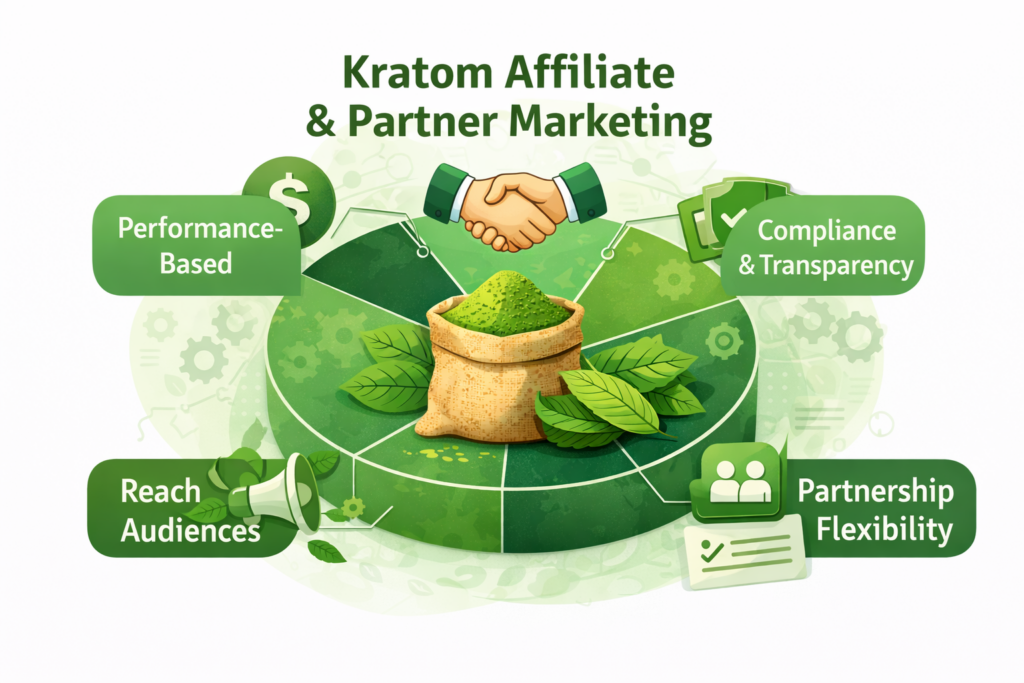
Kratom affiliate marketing and partner marketing are two valuable channels for Kratom brands, especially when traditional ads are limited. It allows you to reach new audiences through trusted voices while keeping your marketing efforts performance-based.
1. Choose Partners Carefully
Work with affiliates, creators, and publishers who understand your rules and can follow them. A bad-fit partner can create compliance problems even if they bring traffic.
2. Give Them Clear Content Rules
Provide approved talking points, banned phrases, and simple brand guidelines before anything goes live. This matters because FDA has cited Kratom claims on brand websites and social media as evidence of intended drug use.
3. Require Clear Disclosures
If a partner is paid, gets a free product, or earns a commission, that relationship should be easy to notice and understand. The FTC’s guidance for influencers and endorsements is very clear on this point.
4. Keep Claims Factual
Partner content should stay away from medical, disease, or result-based promises. The FTC says health-related claims must be truthful, not misleading, and backed by evidence.
5. Review Partner Content Often
Check blog posts, reviews, emails, and social captions from time to time so messaging stays consistent. That helps protect both trust and compliance across your brand.
Social Media For Kratom — What Actually Works?
Social media can still drive growth for Kratom brands, but only if the approach stays careful and realistic. For brands learning “how to market Kratom online?” Social platforms work best when the focus is on education, consistency, and community-building rather than direct selling.
Platforms That Are More Flexible For Kratom Brands
- YouTube is usually the most workable option for educational content. It allows some content to remain up when it has an educational, documentary, scientific, or artistic context.
- Instagram, Facebook, TikTok, and Pinterest are better for organic posting than direct promotion. Their rules are stricter around unsafe products, supplements, and medical claims.
- Do not rely on paid social alone. In this niche, organic reach, community content, and brand consistency are usually more dependable than ad approvals. This is an inference based on the platform rules above.
| Content Ideas That Don’t Trigger RestrictionsTo stay compliant, your content should inform rather than sell. Take a look at common content ideas that don’t trigger restrictions: Educational posts (e.g., “What is Kratom?”)Behind-the-scenes content (sourcing, packaging)General strain information without claimsFAQs and myth-busting contentUser-generated content (reviews, experiences—shared carefully) |
➜ Avoid aggressive promotions, medical claims, or “before-and-after” style messaging.
Building Kratom Brand Awareness Organically
- Use social media to support trust, not just sales: Helpful posts build stronger awareness than constant promotional content. This matches Google’s people-first content guidance.
- Repurpose useful content: One blog can become a short video, a carousel, or a Q&A post. That helps keep your brand visible without sounding repetitive.
- Stay consistent across platforms: A steady voice, careful wording, and regular posting usually do more for Kratom brand awareness than aggressive selling. This is an inference based on current platform restrictions.
➜ Remember! For Kratom brands, social media works best when it is education-led, organic-first, and low-claim.
Why Work With A Specialized Kratom Marketing Agency?
Kratom marketing is more complex than standard e-commerce marketing because the category faces tighter rules around product claims, advertising, and platform access. That is why many brands benefit from working with an agency that already understands how this space works.
- They know the risk areas: A specialized team like CBD Marketing Solutions can spot risky wording, mixed messaging, and weak compliance practices early.
- They focus on the right channels: For Kratom brands, SEO, content, ecommerce strategy, and organic visibility usually matter more than paid ads.
- They connect growth with compliance: The goal is not only to avoid problems, but also to build pages and content that attract traffic and support trust.
- They reduce wasted time: Industry experience helps avoid trial and error and makes the overall strategy more focused.
Ready To Grow Your Kratom Brand Online More Strategically?
Growing a Kratom brand online takes more than basic marketing. It requires the right mix of SEO, compliant content, ecommerce strategy, and brand visibility that fits the limits of this industry. CBD Marketing Solutions helps Kratom businesses build smarter digital strategies by improving site structure, strengthening content, refining keyword targeting, and supporting long-term organic growth.
Whether the goal is to rank better, attract the right audience, or create a more focused marketing plan, the team can help turn scattered efforts into a clearer path forward. For expert guidance, contact us at 📩 info@cbdmarketingsolutions.com.
Kratom Marketing: Key Questions Answered
1. How To Market Kratom Online Safely?
Focus on SEO, educational content, and clear, compliant messaging. Avoid making medical claims, use proper disclaimers, and stick to platforms and strategies that won’t put your brand at risk.
2. What Is Kratom Digital Marketing?
Kratom digital marketing involves promoting your products through channels like SEO, content, email, and social media. It focuses on building visibility and trust while staying within strict compliance rules.
3. Can I Run Ads For Kratom Products?
Most major platforms like Google and Meta restrict Kratom ads, making paid campaigns difficult to scale. While limited options may exist, brands usually rely more on organic marketing for consistent growth.
4. What Is The Best Kratom Seo Strategy?
The best strategy is to target intent-based keywords, create helpful and informative content, and optimize your website structure. This helps attract the right audience and build long-term organic traffic.
5. How Do I Build Kratom Brand Awareness?
You can build awareness by consistently sharing educational content, engaging on social media, and collaborating with trusted partners. Over time, this helps establish credibility and recognition in your niche.
6. What Content Works Best For Kratom Websites?
Content like strain guides, product comparisons, beginner blogs, and FAQs works best. It answers user questions, builds trust, and supports both SEO and conversions.
7. How Can I Grow My Kratom E-commerce Store?
Focus on driving traffic through SEO, improving product pages for better conversions, and using email marketing to retain customers. A smooth user experience also plays a key role in increasing sales.