A CBD brand and a Delta THC brand may both sell cannabis-derived products, but treating them the same in marketing can lead to missed opportunities and compliance headaches. Buyers search for these products with different expectations, ask different questions, and respond to different messages.
That means the content, SEO strategy, product positioning, and even the language used in campaigns need to change accordingly. Understanding those differences is essential for brands competing in today’s cannabis market. This guide breaks down Delta THC vs CBD marketing, highlighting what sets them apart and the strategies that tend to work best for each category.
Delta THC vs CBD Marketing: Key Differences at a Glance
Delta THC vs CBD marketing works best when brands understand how buyer intent, product expectations, and compliance needs differ from the start.
| Marketing Factor | CBD Marketing | Delta THC Marketing |
| Buyer Intent | Trust, ingredients, product details | Effects, strength, legality |
| Positioning | Non-intoxicating and wellness-focused | Psychoactive and experience-led |
| SEO Focus | Guides, FAQs, product explainers | Comparisons, legal topics, format guides |
| Compliance Risk | Unsupported wellness claims | Effect claims, age limits, legal variation |
| Content Tone | Reassuring and informative | Careful and comparison-focused |
Delta THC vs CBD Marketing: The Core Difference
While CBD and Delta THC products often appear under the same cannabis umbrella, the way consumers discover, evaluate, and purchase them can be very different. These differences influence everything from brand messaging and content creation to SEO and compliance planning.
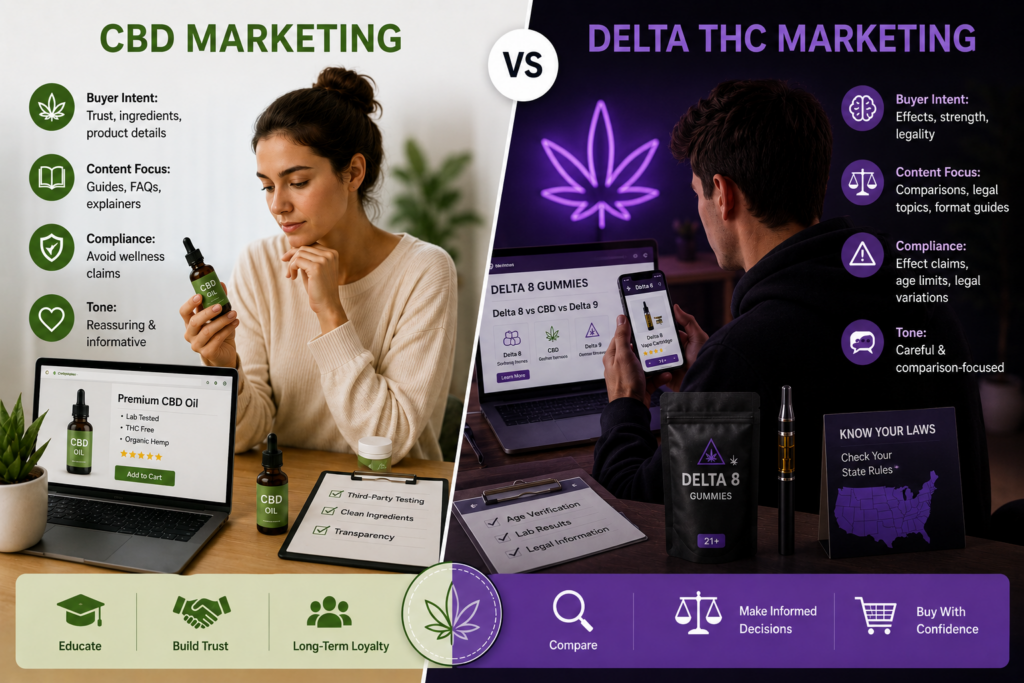
1. CBD vs THC Strategy: How Buyer Intent Changes
- CBD and THC buyers usually enter the search journey with different goals.
- CBD shoppers often look for product details, brand trust, ingredients, and reassurance that the product fits their needs without an intoxicating experience.
- THC shoppers, on the other hand, are more likely to compare effects, strength, legality, product format, and overall experience before choosing.
| ⭐Intent split:CBD buyers ask: “Can I trust this product?”THC buyers ask: “What should I expect from this product?” |
That difference of CBD vs THC changes the entire strategy. CBD content should focus on education, transparency, and trust signals, while THC content needs stronger comparison points, careful wording, and legal awareness.
2. Delta 8 vs CBD Marketing: The Message Cannot Sound The Same
CBD marketing generally focuses on transparency, product formulation, and consumer education. Brands often highlight ingredient quality, testing standards, and product consistency to build trust.
Delta 8 marketing requires a more careful approach. Since consumers frequently have questions about legality, cannabinoid differences, and product formats, messaging often centers on product comparisons and factual explanations rather than promotional claims.
🎯 Key Messaging Focus:
✔️CBD Brands
- Product quality and sourcing
- Ingredient transparency
- Brand trust and credibility
✔️Delta 8 Brands
- Product differentiation
- Legal considerations
- Format and potency comparisons
3. CBD, Delta 8, And Delta 9: How Content Priorities Change?
- CBD, Delta 8, and Delta 9 content should not follow the same plan. CBD marketing usually leans toward education, product details, and long-term brand trust.
- Delta 8 SEO content often needs comparison-based explanations because buyers want to understand how it differs from CBD and Delta 9.
- Delta 9 content usually needs stronger legal awareness because rules can vary based on product type, THC limits, and location.
| Content Focus | CBD | Delta 8 | Delta 9 |
| Educational Guides | Helpful for beginner product research | Useful for explaining cannabinoid differences | Useful when paired with legality and product guidance |
| Product Comparisons | Works for format and ingredient comparisons | Very important for CBD vs Delta 8 or Delta 8 vs Delta 9 searches | Important for Delta 8 vs Delta 9 and hemp-derived THC comparisons |
| Legality Content | Needed for hemp, CBD rules, and local buying questions | Strongly needed because legality can vary by state | Strongly needed because THC limits and product rules vary |
| Brand Trust Content | Builds confidence before purchase | Helps reduce confusion around product claims | Helps support responsible, compliant positioning |
4. Delta 8 vs CBD SEO: Keyword Intent And Content Planning
SEO plays a major role in cannabis marketing because many paid ad and social platforms place limits on CBD and THC-related promotions. That means the keyword plan should match what buyers actually want to know at each stage.
⭐CBD Keyword Focus:
- CBD content usually works well with informational searches, product explainers, ingredient-focused pages, buying guides, and FAQs.
- These topics help brands build trust before the reader reaches a product page.
⭐Delta 8 Keyword Focus:
- Delta 8 content often needs to answer comparison and decision-stage searches.
- Buyers may look for legality, product formats, strength, local availability, and differences between Delta 8, CBD, and Delta 9.
💡 Read more: Delta 8 Marketing: Strategy, Future & Insights
Marketing Strategies That Drive Results For CBD And Delta THC Brands
What Works In CBD Marketing?
CBD marketing works best when it reduces buyer hesitation. Since CBD is generally positioned as non-intoxicating, brands can focus on product education, ingredient transparency, testing access, and simple buying guidance without making medical or guaranteed-result claims.
✔️Tactics that work well:
- Easy COA Access: Add third-party lab reports on product pages and make them easy to find through QR codes or dedicated testing pages.
- Educational SEO: Create beginner-friendly guides around CBD types, product formats, ingredients, hemp sourcing, and buying tips.
- Lifestyle-Friendly Positioning: Place CBD in everyday wellness conversations carefully, without promising recovery, sleep, pain relief, or medical outcomes.
- Trust-Led Product Pages: Include product details, testing information, customer reviews, shipping details, and return policy information.
- Platform-Aware Promotion: Use SEO, email, affiliate content, and compliant ad options because many platforms still limit CBD-related promotions.
What Works In Delta THC Marketing?
Delta THC affiliate marketing needs a more cautious and comparison-led approach. Since Delta 8 and Delta 9 products involve psychoactive effects and stricter platform limits, brands should focus on factual education, responsible positioning, and compliance-first messaging.
✔️Tactics that work well:
- Comparison-Based Content: Build pages that give clear explanation for Delta 8 vs CBD, Delta 8 vs Delta 9, product formats, cannabinoid differences, and legal considerations.
- Responsible Product Copy: Explain strength, format, ingredients, and product details without promising a specific effect or outcome.
- Legality-Focused Resources: Add state-specific guidance where relevant and remind readers to check local laws before buying.
- Age-Gated Shopping Flow: Use 21+ messaging, age checks, careful labeling, and responsible warnings where required.
- Platform-Safe Promotion: Rely more on SEO, email, affiliate content, store locator pages, and compliant ad channels instead of broad social ad campaigns.
Cannabis Product Marketing: Channels That Need Different Approaches
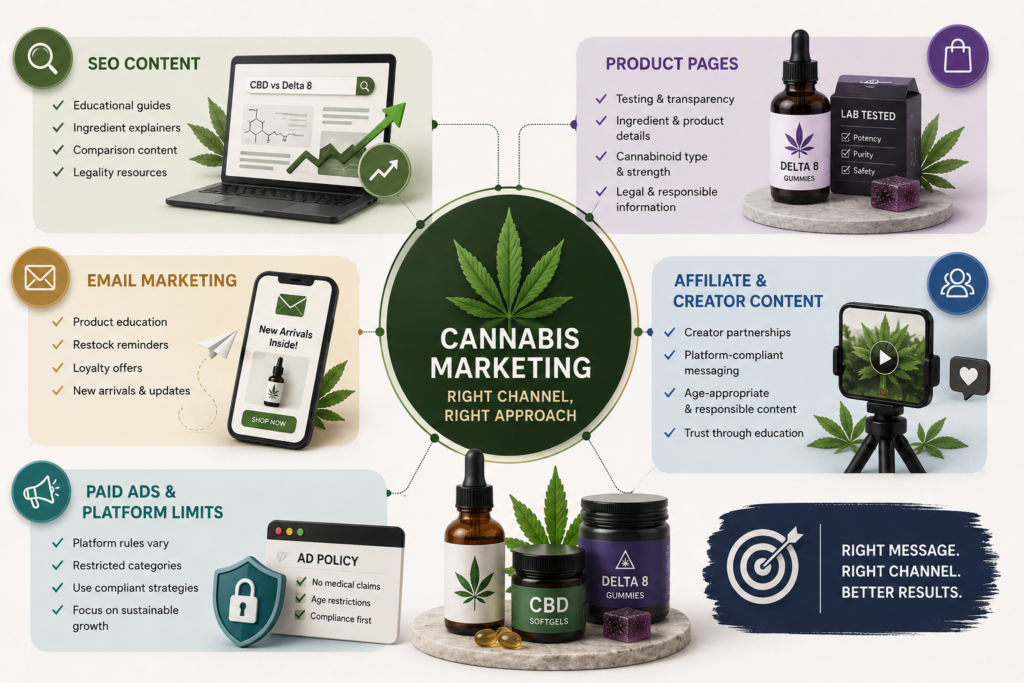
CBD and Delta THC brands may use similar marketing channels, but the content, claims, and buyer journey should not look the same across each one.
SEO Content
- CBD SEO works well with educational guides, ingredient explainers, product format pages, and beginner-friendly FAQs.
- Delta THC SEO needs more comparison-driven content, such as Delta 8 vs CBD, Delta 8 vs Delta 9, product format differences, and legality-focused pages.
Product Pages
- CBD product pages should highlight testing access, ingredient details, product format, reviews, and buying information.
- Delta THC product pages need those trust signals too, but they should also explain cannabinoid type, strength, legal considerations, and responsible product details.
Email Marketing
- CBD email campaigns can focus on product education, restock reminders, loyalty offers, and new arrivals.
- Delta THC emails should be more careful with their wording and avoid exaggerated effect-based claims, focusing instead on product updates, comparisons, and compliance-friendly education.
Affiliate And Creator Content
- CBD brands can work with creators who explain products in everyday wellness conversations without making medical claims.
- Delta THC brands need partners who understand platform rules, age-appropriate messaging, and responsible language.
Paid Ads And Platform Limits
- CBD ads may have limited opportunities depending on the product type, region, and platform rules.
- Delta THC ads face tighter restrictions because THC products involve psychoactive effects and legal variation, so brands often rely more heavily on SEO, email, affiliate content, and compliant ad placements.
💡 Read more:
- Step-by-Step Guide to Cannabis Backlinks for SEO
- Cannabis Affiliate Marketing: Network, Agencies & Insights
Build A Cannabis Marketing Strategy That Matches Your Product
Understanding the differences between CBD and Delta THC marketing is only the beginning. To attract the right audience, improve search visibility, and stay competitive, brands need strategies that align with buyer intent, compliance requirements, and changing search trends.
At CBD Marketing Solutions, we help cannabis brands grow through SEO, content marketing, keyword research, and long-term organic growth strategies tailored to their products. Ready to strengthen your cannabis marketing strategy? Contact us at info@cbdmarketingsolutions.com to learn more about our cannabis SEO and marketing services.
Frequently Asked Questions
Is CBD Marketing Easier Than Delta THC Marketing?
In many cases, yes. CBD brands generally face fewer restrictions around product positioning and consumer education, while Delta THC brands often need to navigate additional compliance requirements, platform limitations, and legal considerations.
How Can Cannabis Brands Avoid Risky Marketing Claims?
Brands should avoid medical promises, guaranteed effects, exaggerated product claims, and language that makes CBD or Delta THC sound risk-free. Content should stay factual, specific, and compliant.
Why Is Local SEO Important For Delta THC Brands?
Local SEO helps Delta THC brands reach buyers searching for nearby availability, store locations, and location-specific product information, especially because legal rules and product access can vary by area.
How Does A THC Marketing Comparison Help Cannabis Brands?
A THC marketing comparison helps brands separate CBD, Delta 8, and Delta 9 strategies by showing how buyer intent, legal sensitivity, product messaging, and content priorities change across each category.