A regulated industry SEO agency outperforms a general agency because it already understands the rules, buyer concerns, and search behavior in regulated markets. For brands in CBD, Kratom, vape, cannabis, delta-8, supplements, and similar spaces, SEO is not just about rankings. It also calls for careful wording, compliance limits, trust-focused content, and a strategy that avoids risky claims.
In this article, we’ll break down why niche expertise matters in regulated industry SEO and how the right agency can help your brand grow without relying on a generic marketing playbook.
What Makes Regulated Industry SEO Different?
Regulated industry SEO is SEO for brands that work under strict rules, such as CBD, Kratom, delta-8, vape, cannabis, supplements, healthcare, and legal. It helps these businesses rank in search without resorting to risky claims, loose wording, or content that could create trust issues.
Simply put, it is about growing search visibility while keeping the content careful, useful, and aligned with industry limits.
Read: Kratom Marketing 101: How To Grow Your Brand Online Compliantly.
Why A Niche SEO Agency Understands Regulated Markets Faster?
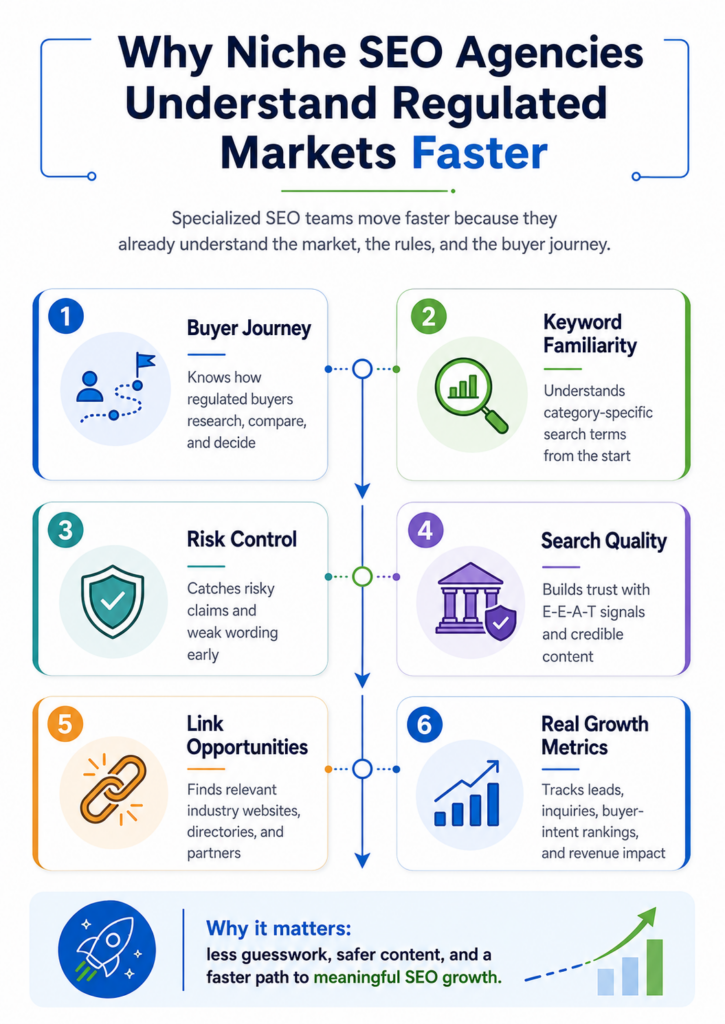
A niche SEO agency understands regulated markets faster because it does not need to start from scratch. It already knows the audience, buying concerns, content limits, and search patterns that shape SEO in restricted categories.
In digital marketing for regulated markets, even small wording choices can affect buyer trust and how safely a page can rank.
Expert Industry Insight
A Niche Agency Already Knows The Buyer Journey
Buyers in regulated industries rarely make quick decisions. They often move through product research, brand comparison, trust checks, policy review, and purchase-ready searches before taking action.
A niche agency knows how to plan content for each step, such as:
- Educational blog posts for early-stage research
- Comparison content for brand evaluation
- FAQs that answer buyer doubts
- Local and online buying pages for stronger intent
Read: How To Rank Your CBD Website On Google In 2026: A Step-by-Step SEO Guide?
Market-Specific Keywords Are Already Familiar
General agencies may need time to learn product terms, buyer-specific phrases, and category-specific search terms. A niche agency already knows how buyers search for formats, strengths, flavors, shipping details, bulk orders, local availability, and brand comparisons.
That saves time and helps the content match real search intent faster.
Read: Compliant CBD Advertising: What You Can And Can’t Do On Google In 2026?
Effective And Correct Messaging
Risky Content Gets Caught Early
Regulated content cannot rely on bold claims or loose wording. A niche agency can spot risky phrases before they go live, especially claims around results, benefits, legality, or product promises.
This matters because compliant SEO still needs to rank, but it also needs to protect the brand from avoidable content mistakes.
Search Quality Standards Are Already Familiar
Regulated industries often face stricter search quality expectations, especially when topics involve money, health, legal matters, or buyer trust. A niche SEO agency knows how to support E-E-A-T through strong author pages, credible references, and trust-building page details.
This helps the brand stay prepared when search updates raise the bar for sensitive categories.
Industry Link Opportunities Are Easier To Find
A niche agency usually knows which industry websites, publishers, directories, and partner platforms are worth targeting. Instead of guessing where to earn backlinks, it can focus on relevant opportunities that fit the market. That makes link building more focused, more credible, and less dependent on random outreach.
Read: How To Create A Vape Content Marketing Strategy That Converts?
Tracking The Real Growth
Success Metrics Match The Market
A niche agency tracks SEO metrics that drive real business growth, not just traffic or keyword movement.
Useful metrics may include:
- Qualified organic leads
- Product or category page visits
- Wholesale inquiries
- Form submissions or calls
- Revenue from organic traffic
- Rankings for compliant buyer-intent keywords
This keeps the SEO plan tied to real business progress, not just numbers that look good in a report.
| Bonus Tips: 6 SEO Moves An SEO Specialist Gets RightUnderstands YMYL Standards: Handles content with extra care because search engines closely review wellness-related topics.Avoids Medical Claims: Keeps copy free from treatment, cure, pain, anxiety, or health-related promises.Fixes Technical SEO: Checks URLs, schema, crawlability, broken links, speed, and mobile performance.Improves The Buying Path: Makes product pages, payment steps, and mobile shopping easier for buyers.Builds Relevant Backlinks: Focuses on niche-specific links rather than risky, low-quality sources.Creates Topic Clusters: Connects blogs, guides, FAQs, and category pages without keyword stuffing. |
Read: 7 Kratom SEO Strategies That Actually Drive Organic Traffic.
Conclusion: Why A Regulated Industry SEO Agency Is The Smarter Choice
A general agency may bring SEO basics to the table, but regulated brands cannot grow with one-size-fits-all solutions. What works for a regular e-commerce store may not work for CBD, Kratom, vape, cannabis, supplements, or other restricted markets. These industries need content, keywords, awareness of compliance requirements, and buyer trust signals tailored to their market realities.
Choosing a regulated industry SEO agency means getting a strategy tailored to your category, not a recycled plan used for every client. In a regulated market, the difference is simple: a recycled SEO plan can only take you so far, but a strategy built for your rules, risks, and buyers gives your brand a stronger way forward.
✍️ Looking to hire an SEO agency for your regulated brand? Contact CBD Marketing Solutions and work with a team that understands your market, content limits, and growth goals.
Frequently Asked Questions
1. What industries need regulated SEO?
Industries such as CBD, Kratom, vape, cannabis, supplements, healthcare, finance, legal, and alcohol often need regulated SEO because their content must follow stricter rules, careful wording, and compliant SEO.
2. CBD Agency vs General Agency: What’s The Difference?
A CBD agency understands CBD search limits, claim-sensitive content, buyer concerns, and platform restrictions. A general agency may know SEO basics, but it often needs more time to understand CBD-specific rules and search behavior.
Read: CBD Marketing: A Complete Guide for 2025.
3. Can a regulated industry SEO agency include product benefits in its content?
Yes, but benefits must be worded carefully. Content should avoid unsupported claims, medical promises, and exaggerated results while staying aligned with industry rules, YMYL standards, and Google’s E-E-A-T expectations.
4. Why is content review important in regulated SEO?
Content review helps catch risky claims, outdated details, compliance issues, and wording that may sound like false advertising or unauthorized advice. It also helps protect buyer trust and prevent serious legal penalties.
5. Does regulated SEO take longer than regular SEO?
Yes, it can. Regulated SEO often takes longer because content, keywords, links, and page updates need extra review, while search engines apply stricter quality checks for trust and authority.
6. Can regulated brands rank without paid ads?
Yes. Regulated brands can rank without paid ads by building authority through transparency, compliance-focused content, educational blogs, technical SEO, strong internal links, and buyer-focused pages.
Read: How to Rank a Vape Shop Website on Google: 9 Proven Tactics.
7. What should regulated SEO content avoid?
It should avoid medical claims, legal guarantees, misleading promises, copied content, keyword stuffing, and statements unsupported by reliable information.
8. Is local SEO useful for regulated industries?
Yes. Local SEO helps regulated businesses capture high-intent local leads, build organic trust, and appear for location-based, store, and ‘near me’ searches while complying with local regulations and platform guidelines.